
Scrap Quality Control Software, automated at the gate
Scrap quality control software that grades every load, catches contamination early, runs the lab-test pipeline and builds supplier scorecards from real data. Protect your margins by catching downgrades at intake, not at the downstream buyer.
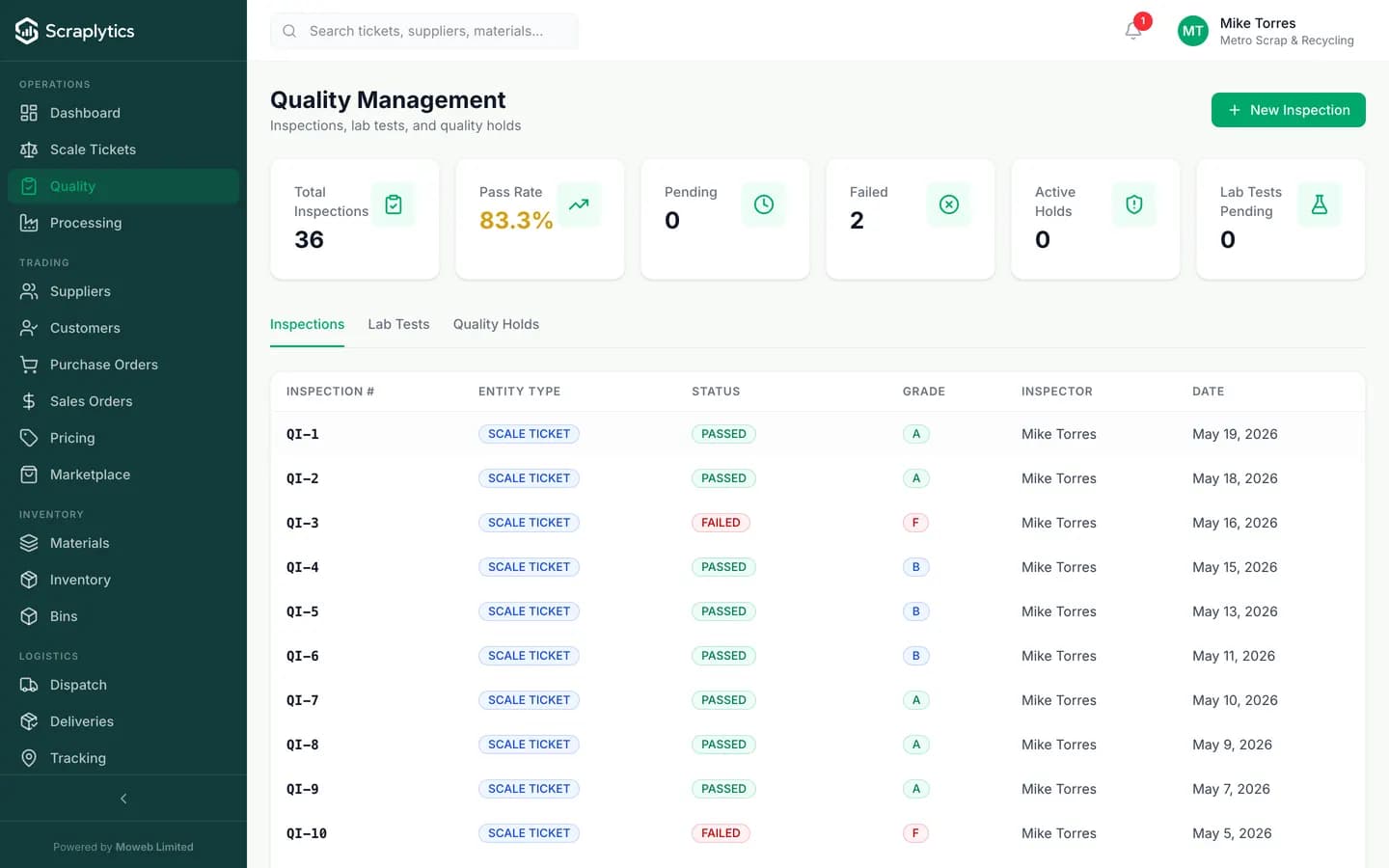
Inspections, pass rate, grades, lab-test pipeline.
Why quality control software is the highest-leverage spend in a yard
A 2% contamination call from your downstream buyer can wipe a month of margin. Catching it at the gate, before payment, is the difference between a profitable yard and a losing one.
You pay the supplier on the spot for "clean copper #2." Two weeks later your mill rejects the bale because it had insulation runs in it. The supplier is long gone, the cost is yours.
Every load gets a structured inspection at intake: photos, contamination percent, grade chip, inspector ID. The system holds payment on out-of-spec loads or auto-applies a contamination discount.
Lab results come back on a PDF emailed to one person. By the time it links to the original load, the material is already shipped or stored mixed with the next consignment.
Lab samples are tagged to the inbound ticket. Results post against the lot. Out-of-spec results auto-quarantine the lot, alert the buyer and the supplier, and trigger a chargeback workflow.
One supplier consistently brings in low-grade material with their high-grade loads. You suspect it, but you do not have the evidence to have the conversation.
The supplier scorecard tracks pass-rate, average downgrade percent, and contamination types across all of their loads, with a 90-day trend. Hard numbers replace gut feel in the conversation.
Complete Quality Management
How It Works
Define Quality Standards
Set grading criteria, contamination thresholds, and inspection checklists for each material type your yard handles.
Inspect Incoming Loads
Yard staff use mobile devices to grade materials, capture photos, and flag contamination - right at the scale.
Automate Holds & Alerts
Non-conforming loads are automatically held. Suppliers get notified, and managers see real-time quality dashboards.
Inside the quality engine
Inspection rules that catch problems at the gate
Per-material checklists run at intake: copper insulation %, aluminum oxidation, steel oil contamination, attached parts, mixed-grade percentage. Out-of-spec values trigger a hold status the cashier sees before payout. The inspector chooses to accept-with-deduction, reject the load, or escalate to a supervisor. Every decision is logged.
Lab test pipeline for ICP, XRF and downstream chemistry
Tag samples to a lot, ship to your lab partner, capture results when they return. Results post against the lot with the original supplier and price intact, so margin recalculation is automatic. Out-of-spec results trigger a workflow: notify supplier, hold for inspection, charge back, downgrade, or release. The whole chain stays on one record.
Supplier scorecards that change buying behavior
Every supplier has a quality scorecard - inspection pass rate, average contamination percent, average downgrade percent, lab pass rate, complaint history. Aggregate over 30/60/90/365 days, compare across suppliers, sort by volume. Use the scorecard when negotiating contract rates, qualifying new suppliers, or having the hard conversation with the marginal ones.
Frequently asked questions
Can I configure different inspection rules per material type?+
Yes. Every material/grade combination has its own checklist, contamination thresholds, and pass/fail criteria. Copper #2 has different rules from #1 bare bright, which has different rules from aluminum 6063 or stainless 304. Rules live in one settings screen and roll out instantly.
How does the system integrate with our lab?+
For most labs we send sample requests by email or API and ingest results as PDF, CSV or direct API. Common XRF and ICP instrument formats are supported out of the box. For specialty labs we map the result fields once during onboarding and the pipeline runs from there.
What happens to a load flagged as non-conforming?+
A hold is placed: payment cannot post, the lot is quarantined in inventory, and the supplier and yard manager get notified. The manager decides to accept with a price adjustment, reject and dispatch the supplier to remove, or rework on-site. The full decision trail is on the ticket.
How do I prove quality history to a downstream buyer?+
Every sale carries a downstream-buyer quality pack: inspection photos, contamination percent, lab results (if any), and inspector signatures across the inbound loads that built the outbound lot. Generate a one-click quality certificate PDF for the buyer at sale time.

Ready to modernize your scrap yard?
Start your 14-day free trial today and be writing digital tickets by tomorrow. No credit card, no contract.
- No credit card required
- 14-day free trial
- Cancel anytime